
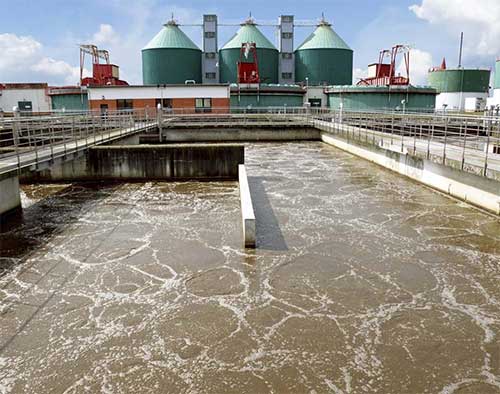
Hey there, eco-conscious readers! 👋 Have you ever stopped to think about where the water goes after it swirls down your drain or flushes away? It’s a journey far more complex and crucial than you might imagine. Today, we’re diving deep into the essential process of wastewater treatment – a silent hero working tirelessly behind the scenes to protect our environment and ensure the availability of clean water for generations to come.
In an increasingly populated and industrialized world, effective wastewater treatment isn’t just an option; it’s an absolute necessity. From the water we use in our homes to the byproducts of factories and farms, all of it needs proper purification before it can be safely returned to our precious ecosystems. Let’s embark on this journey to understand why wastewater treatment is so vital, how it works, and the innovative ways we’re achieving cleaner outcomes.
Why Wastewater Treatment is Non-Negotiable for Our Future 🚨
Imagine a world where untreated sewage and industrial discharge flow freely into rivers, lakes, and oceans. The consequences would be catastrophic:
Environmental Degradation: Untreated wastewater carries pollutants that deplete oxygen, harming aquatic life, and disrupting delicate ecosystems. 🐟❌
Public Health Risks: Pathogens like bacteria, viruses, and parasites can spread waterborne diseases, leading to severe health crises. 🤢
Resource Depletion: Without proper wastewater treatment, we lose the opportunity to reclaim and reuse valuable water resources, exacerbating water scarcity. drought zones
Economic Impact: Contaminated water bodies negatively impact tourism, fisheries, and agricultural industries. 💸
Effective wastewater treatment safeguards public health, preserves biodiversity, and helps maintain the natural balance of our planet. It’s an investment in sustainable living and future prosperity.
The Journey of Dirty Water: Stages of Wastewater Treatment 🛣️
Wastewater treatment is a multi-stage process, meticulously designed to remove various contaminants. Think of it as a series of sophisticated sieves, filters, and biological purifiers. While specific technologies can vary, most plants follow three primary stages: Primary, Secondary, and Tertiary Treatment.
1. Primary Wastewater Treatment: The First Sift 🗑️
This initial stage focuses on removing large, easily settleable solids and floating materials. It’s largely a physical process.
Screening: Raw wastewater first passes through large screens to remove debris like rags, plastics, sticks, and other bulky items that could damage pumps and equipment. Imagine a giant kitchen strainer!
Grit Removal: The water then flows into grit chambers, where the flow velocity is reduced. This allows heavier inorganic materials like sand, gravel, and coffee grounds (grit) to settle to the bottom, while lighter organic matter remains suspended.
Sedimentation (Primary Clarification): The wastewater moves into large, circular or rectangular tanks called primary clarifiers or sedimentation tanks. Here, the flow slows down considerably, allowing organic solids (sludge) to settle by gravity to the bottom, and lighter materials (scum, grease) to float to the surface. Scrapers collect the sludge, and skimmers remove the scum.
Infographic Suggestion for Primary Treatment: (Simple flow diagram: Raw Wastewater -> Screens -> Grit Chamber -> Primary Clarifier (with sludge and scum arrows) -> Primary Effluent)
2. Secondary Wastewater Treatment: The Biological Cleanup 🦠
This is where the magic of biology happens! Secondary wastewater treatment uses biological processes to remove dissolved and suspended organic matter that escaped primary treatment. Microorganisms play a starring role.
Aeration Basins (Activated Sludge): The most common method. Primary effluent enters large aeration tanks where air (oxygen) is pumped in to encourage the growth of aerobic bacteria and other microorganisms. These microorganisms consume the dissolved organic pollutants (food for them!), converting them into carbon dioxide, water, and new bacterial cells (activated sludge).
Why Oxygen? Oxygen is vital because these helpful bacteria need it to break down the organic matter efficiently.
Trickling Filters: Another common method. Wastewater is sprayed over beds of porous media (like rocks, plastic, or foam). A layer of slime (biofilm) containing microorganisms grows on the media. As water trickles down, the microorganisms consume the organic matter.
Rotating Biological Contactors (RBCs): Large, slowly rotating discs partially submerged in wastewater. Microorganisms grow on the disc surfaces, picking up organic pollutants as they rotate through the water and air.
Secondary Sedimentation (Secondary Clarification): After the biological process, the water flows into secondary clarifiers. The activated sludge (microorganisms clumped together) settles to the bottom, leaving behind clarified effluent. A portion of this settled sludge is recycled back to the aeration basins to maintain a healthy population of hungry microbes.
Infographic Suggestion for Secondary Treatment: (Flow diagram: Primary Effluent -> Aeration Basin/Trickling Filter/RBC -> Secondary Clarifier (with activated sludge return arrow) -> Secondary Effluent)
3. Tertiary Wastewater Treatment: The Final Polish ✨
This advanced stage is implemented when higher water quality is required for discharge or reuse. It removes specific contaminants that primary and secondary treatments might miss.
Filtration: This is a crucial step for removing remaining suspended solids, turbidity, and even some microorganisms. Water is passed through various filter media.
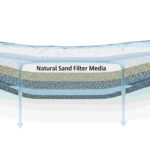
Sand Filters: A very common and effective method. Water flows through beds of granular media, often including layers of natural sand. Our very own natural sand filter media, precisely graded and highly pure, plays a vital role here, ensuring efficient removal of fine suspended particles and excellent water clarity. The carefully selected natural sand filter media acts as a final barrier, trapping even the smallest impurities. Learn more about our high-quality Natural Sand Filter Media here.
Multi-media Filters: Often utilize layers of different materials like anthracite, garnet, and natural sand filter media of varying sizes, providing increasingly finer filtration. Our natural pebble filter media also forms the crucial support base for these systems. You can explore our Natural Pebble Filter Media here.
Disinfection: To eliminate any remaining pathogens, the water is disinfected. Common methods include:
Chlorination: Adding chlorine gas or hypochlorite.
Ultraviolet (UV) Light: Exposing water to UV radiation, which inactivates microorganisms by damaging their DNA. This is a chemical-free method. ☀️
Ozonation: Using ozone gas, a powerful oxidant, for disinfection.
Nutrient Removal (Nitrogen & Phosphorus): Excess nitrogen and phosphorus can lead to eutrophication (algal blooms) in receiving waters. Specific biological and chemical processes are used to remove these nutrients.
Advanced Oxidation Processes (AOPs): For very high-quality effluent, AOPs (like ozone, UV, hydrogen peroxide combinations) can remove trace contaminants, pharmaceuticals, and other persistent organic pollutants.
Infographic Suggestion for Tertiary Treatment: (Flow diagram: Secondary Effluent -> Filtration (with a highlight on “Natural Sand Filter Media”) -> Disinfection -> Discharge/Reuse)
Beyond the Stages: Sludge Treatment 💩➡️🌱
While we’re cleaning the water, what about the solids (sludge) collected in primary and secondary clarifiers? This sludge is rich in organic matter and needs further treatment to reduce its volume, stabilize it, and make it safe for disposal or beneficial reuse.
Thickening: Removing some water to reduce volume.
Digestion: Anaerobic or aerobic digestion uses microorganisms to break down organic matter in the sludge, reducing pathogens and odors. Anaerobic digestion can even produce biogas (methane), a renewable energy source! 💡
Dewatering: Further removing water using processes like belt presses, centrifuges, or drying beds, to reduce volume and prepare for disposal or reuse.
Disposal/Reuse: Treated sludge (biosolids) can be safely used as fertilizer in agriculture, incinerated, or sent to landfills.
Industrial Wastewater Treatment: A Specialized Challenge 🏭🧪
While municipal wastewater treatment deals primarily with domestic sewage, industrial wastewater presents unique challenges due to its diverse and often toxic contaminants. Different industries produce different types of wastewater, requiring specialized treatment solutions.
Chemical Manufacturing: May contain heavy metals, solvents, and highly acidic/alkaline discharges.
Food & Beverage: Often high in organic matter, fats, oils, and greases (FOG).
Textile Industry: Characterized by high color, heavy metals, and suspended solids.
Pharmaceutical Industry: Can contain complex organic compounds and drug residues.
Industrial wastewater treatment often incorporates additional processes like chemical precipitation, membrane filtration (reverse osmosis, ultrafiltration), advanced oxidation, and specialized biological reactors to handle these specific pollutants.
The Role of Natural Sand Filter Media in Water Treatment 🌿
Our company, a proud manufacturer of high-quality natural sand filter media, understands its critical role in effective wastewater treatment. When it comes to achieving crystal-clear effluent, natural sand filter media is often the unsung hero.
Precision and Purity: Our natural sand filter media is sourced from pristine deposits and undergoes rigorous processing to ensure optimal grain size, high silica content, and minimal impurities. This precision is vital for creating filter beds that efficiently capture suspended solids without compromising flow rates.
Layered Filtration: In multi-media filters, different grades of natural sand filter media are layered, providing a progressively finer filtration process. The larger grains at the bottom support finer layers, ensuring excellent drainage and preventing clogging, while the smaller grains at the top capture minute particles.
Durability and Longevity: The inherent hardness and chemical inertness of natural sand filter media ensure it can withstand the demanding conditions of continuous filtration and frequent backwashing, providing a long service life and reducing replacement frequency.
Environmental Compatibility: Being a natural product, our natural sand filter media is an environmentally friendly choice, contributing to sustainable wastewater treatment practices.
Learn more about our specific natural sand filter media product, designed to meet rigorous standards for various filtration applications, right here: 1.18-2mm Natural Sand Filter Media product . And for larger support layers, don’t forget our robust 25-40mm Natural Pebble Filter Media product.
Emerging Technologies and the Future of Wastewater Treatment 🚀
The field of wastewater treatment is constantly evolving, driven by the need for greater efficiency, lower energy consumption, and the ability to remove increasingly complex contaminants.
Membrane Bioreactors (MBRs): Combine activated sludge with membrane filtration, producing very high-quality effluent and often reducing footprint.
Granular Sludge Technology: Promotes the formation of dense microbial granules that settle well, leading to more compact and efficient reactors.
Resource Recovery: Shifting from “waste treatment” to “resource recovery.” Plants are increasingly designed to recover valuable resources like energy (biogas), nutrients (nitrogen, phosphorus), and even clean water for reuse.
Smart Wastewater Treatment: Integrating sensors, AI, and data analytics to optimize plant operations, predict maintenance needs, and respond dynamically to changes in wastewater characteristics. 🤖
These advancements highlight a future where wastewater treatment facilities are not just pollution control centers but active contributors to a circular economy, producing resources rather than just managing waste.
Your Role in Wastewater Treatment 🏡
While complex systems handle the heavy lifting, you also play a crucial part in effective wastewater treatment:
Don’t Flush Harmful Substances: Avoid flushing medications, chemicals, fats, oils, and greases (FOG) down the drain. These can clog pipes and disrupt the biological processes at the treatment plant. 🚫🚽
Conserve Water: Less wastewater means less energy and resources needed for treatment. 💧⬇️
Support Local Initiatives: Be aware of and support local efforts related to water conservation and wastewater treatment infrastructure.
Conclusion: A Foundation for a Sustainable World 🌎💚
Wastewater treatment is an indispensable service, transforming contaminated water into a resource that can be safely returned to our environment or even reused. From the initial screening to advanced filtration using high-quality natural sand filter media, every stage is critical for removing pollutants and protecting public health and ecosystems.
As we face growing environmental challenges, the importance of robust and innovative wastewater treatment only intensifies. By understanding this complex process and supporting its advancement, we contribute directly to a healthier planet and a more sustainable future for everyone. Let’s continue to champion clean water – it’s the foundation of life itself.

Natural Silica Sand for Traction: The Unsung Hero of Railway Safety & Efficiency 🚂砂
Discover the vital role of natural silica sand in railway operations. Learn how this specially graded material enhances track-to-wheel traction, ensuring safety and efficiency for trains, especially in challenging conditions.
Silex Sand: The Unsung Hero of Clean Water & Industrial Purity 💧🏭
Hey there, curious minds and industry professionals! 👋 When you think about the bedrock materials

Water Purification Systems for Home: Your Ultimate Guide to Clean Drinking Water 💧🏡
Hey there, health-conscious homeowners! 👋 We all know how vital clean drinking water is for
Sand Filter Media for Water Purification: Your Gateway to Cleaner Water 💧🔍
Hey there, clean water advocates and filtration enthusiasts! 👋 Have you ever wondered about the
Wastewater Treatment: A Comprehensive Guide to Cleaner Water & a Healthier Planet 💧🌍
Hey there, eco-conscious readers! 👋 Have you ever stopped to think about where the water