
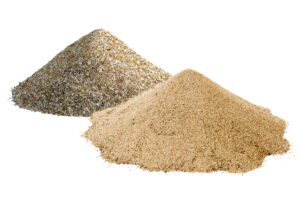
Hey there, clean water advocates and filtration enthusiasts! 👋 Have you ever wondered about the quiet workhorse behind countless water purification systems worldwide? It’s often unassuming, yet absolutely vital: sand filter media. From municipal drinking water plants to industrial process lines and even your home filtration system, sand filter media plays a pivotal role in transforming raw, turbid water into clear, safe liquid.
Today, we’re taking a deep dive into the fascinating world of sand filter media – what it is, how it works its magic, its diverse applications, and why selecting the right type is paramount for effective water purification. As a leading manufacturer of high-quality natural sand filter media, we’re here to share insights that will help you understand its critical importance in achieving cleaner water for a healthier future.
What Exactly is Sand Filter Media? 🤔
At its core, sand filter media refers to specially selected and processed granular materials, primarily silica sand, used in filtration beds to remove suspended solids, turbidity, and other impurities from water. Unlike simple sieving, filtration with sand filter media involves a complex interplay of physical and sometimes chemical processes that trap contaminants as water passes through the porous bed.
Key Characteristics of High-Quality Sand Filter Media:
Grain Size and Uniformity: Precisely graded to ensure optimal porosity and filtration efficiency.
High Silica Content: Guarantees chemical inertness, meaning it won’t react with the water or leach undesirable substances.
Hardness and Durability: Allows it to withstand the rigors of filtration and frequent backwashing without degrading.
Low Impurities: Free from clay, organic matter, and other contaminants that could interfere with filtration or pollute the water.
The Magic Behind the Clarity: How Sand Filter Media Works 🛠️
The effectiveness of sand filter media in water purification stems from several mechanisms:
Mechanical Sieving (Straining): This is the most straightforward mechanism. Larger suspended particles are physically trapped in the spaces between the sand filter media grains as water flows through.
Sedimentation: Smaller, denser particles settle onto the surface of the sand filter media grains due to gravity within the tortuous pathways of the filter bed.
Adsorption: The surface of the sand filter media grains can attract and hold certain dissolved or very fine colloidal particles through electrostatic forces. This is particularly effective for certain types of organic matter.
Flocculation: Pre-treatment often involves adding coagulants that cause tiny particles to clump together (flocculate). These larger flocs are then more easily trapped by the sand filter media.
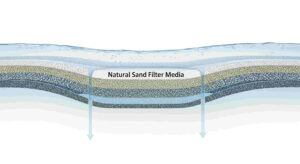
As water passes downwards through the sand filter media bed, the pores effectively become smaller due to trapped particles, leading to increased filtration efficiency. Eventually, the bed becomes clogged, and a process called “backwashing” is required to clean and re-fluidize the media.
Infographic Suggestion: How a Sand Filter Works (Diagram showing water flowing down through sand layers, arrows for trapped particles, then arrows for backwash flow cleaning the media and carrying away dirt.)
Backwashing: Cleaning the Filter Bed 🚿
Backwashing is a critical maintenance process that involves reversing the flow of water (and sometimes air) through the sand filter media bed. This lifts and expands the media layers, dislodging the trapped impurities, which are then flushed out as “backwash waste.” Regular and effective backwashing is crucial for maintaining the long-term efficiency and performance of your sand filter media.
Types and Applications of Sand Filter Media 🌎
While “sand” is the primary component, sand filter media comes in various grades and combinations, each tailored for specific filtration needs.
1. Rapid Sand Filters (RSF): The Workhorse of Water Plants
How it works: Water (often pre-treated with coagulation and flocculation) flows relatively quickly through a bed of sand filter media (typically 0.45-0.55 mm effective size) at a high filtration rate.
Applications: Widely used in municipal drinking water treatment plants, large industrial facilities, and swimming pool filtration. They require regular backwashing.
2. Slow Sand Filters (SSF): Nature’s Own Purifier
How it works: Water flows very slowly through a deep bed of sand filter media (finer than RSF). A biological layer called “schmutzdecke” forms on the surface, providing biological purification in addition to physical filtration.
Applications: Excellent for treating water with low to moderate turbidity, often used in smaller communities or for specific environmental applications where chemical pre-treatment is undesirable. Less frequent cleaning (scraping the schmutzdecke) is needed compared to backwashing.
3. Multi-Media Filters: Layered Efficiency 📊
These filters combine different granular media in layers to achieve more efficient and deeper filtration. The coarser, heavier media is at the bottom, supporting progressively finer, lighter media on top. This allows for removal of a wider range of particle sizes and extends filter run times.
Common Multi-Media Layers (Top to Bottom):
Anthracite: Lightweight, coarse, good for trapping larger, lighter particles.
Sand Filter Media: Typically natural sand filter media (e.g., 0.45-0.55 mm or 1.18-2 mm) acts as the primary filtration layer for fine suspended solids.
Garnet/Ilmenite: Heavier, finer, used as a support layer or for polishing.
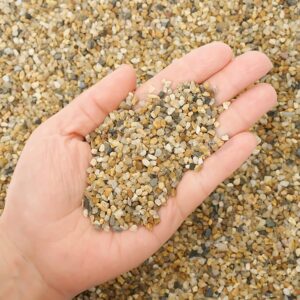
Gravel/Pebbles: Coarsest and heaviest, provides support for the media above and prevents it from entering the underdrain system. This is where our 25-40 mm Natural Pebble Filter Media becomes essential.
Table Suggestion: Filter Type Comparison
Filter Type | Primary Mechanism | Media Used (Typical) | Applications | Key Advantage | Maintenance Frequency (Typical) |
Rapid Sand | Mechanical, Adsorption | Sand Filter Media | Municipal, Industrial, Pools | High flow rates, effective | Frequent Backwash |
Slow Sand | Biological (Schmutzdecke) | Fine Sand Filter Media | Small communities, low turbidity water | No chemicals, excellent pathogen removal | Less frequent scraping |
Multi-Media | Layered Filtration | Anthracite, Sand, Garnet, Gravel | High turbidity, advanced filtration | Deeper filtration, longer run times | Backwash |
Why Natural Sand Filter Media is the Superior Choice 🌱💎
As manufacturers specializing in natural sand filter media, we emphasize the significant benefits of choosing naturally sourced, high-quality materials for your water purification needs.
Purity and Inertness: Our natural sand filter media is derived from pristine silica deposits, ensuring a high SiO₂ content (typically >95%) and minimal impurities. This inherent purity means it won’t react with the water or introduce contaminants, making it safe for potable water applications.
Optimal Grain Shape and Hardness: Natural sand grains, particularly those from well-sorted deposits, often have sub-angular to rounded shapes that allow for optimal porosity and effective contaminant removal without excessive compaction. Their natural hardness ensures durability against attrition during operation and backwashing.
Cost-Effectiveness: Compared to synthetic media or less abundant natural materials, natural sand filter media is often more cost-effective, offering an economical yet highly efficient solution for large-scale filtration projects.
Environmental Friendliness: As a naturally occurring mineral, sand filter media is an environmentally sound choice, contributing to sustainable water treatment practices. It’s simply harnessing nature’s own filtration power! 🌳
Our commitment to quality means our natural sand filter media undergoes rigorous processing, including washing, drying, and precise size grading, to ensure it meets stringent industry standards like IS: 8419, AWWA B100, and NSF/ANSI 61.
Explore our high-quality 1.18–2 mm Natural Sand Filter Media, perfect for intermediate and primary filtration layers, designed to optimize your water purification process: [Link to your 1.18-2mm Natural Sand Filter Media product page]. For the essential coarse support layers, also consider our robust 25-40 mm Natural Pebble Filter Media here.
Key Considerations When Choosing Sand Filter Media 🧐
Selecting the right sand filter media isn’t a one-size-fits-all decision. Several factors influence the optimal choice for your application:
Raw Water Quality: The type and concentration of impurities in the incoming water (turbidity, suspended solids, organic matter) will dictate the required filtration efficiency.
Desired Effluent Quality: What is the target purity of the treated water? Is it for drinking, industrial processes, or discharge?
Filter Design: The type of filter (rapid, slow, multi-media), bed depth, and flow rates are all crucial.
Backwashing Capabilities: The available pressure and flow for backwashing will influence media selection.
Regulatory Standards: Compliance with local and international drinking water or discharge standards (e.g., NSF/ANSI 61, AWWA, IS) is paramount.
Cost and Availability: Balancing performance requirements with budget and reliable supply chain.
Collaborating with experienced suppliers and engineers is key to specifying the precise grade and quantity of sand filter media needed for your unique system.
Installation and Maintenance of Sand Filter Media Filters ✨
Proper installation and ongoing maintenance are vital for the longevity and performance of any filter utilizing sand filter media.
Careful Layering: In multi-media filters, precise layering of different media sizes (coarse to fine from bottom to top, accounting for specific gravity) is crucial to prevent intermixing.
Initial Washing: New sand filter media should be thoroughly washed or backwashed during commissioning to remove any fines or dust that accumulated during transport and installation.
Regular Backwashing: Establish a regular backwashing schedule based on pressure differential or effluent turbidity. This prevents clogging and maintains bed porosity.
Media Inspection: Periodically inspect the sand filter media bed for signs of degradation, clumping, or loss of material.
Replacement: Over time, even the most durable sand filter media may require replacement due to attrition or irreversible fouling.
The Future of Water Purification and Sand Filter Media 🚀
As water scarcity and pollution challenges intensify globally, the demand for efficient and sustainable water purification solutions will only grow. Sand filter media will continue to be a cornerstone technology, but we can expect advancements:
Optimized Granular Media: Further refinement in the grading and characteristics of sand filter media for enhanced performance.
Hybrid Systems: Integration of sand filter media with other advanced technologies like membranes or biological processes for more comprehensive treatment.
Sustainable Sourcing: Continued focus on environmentally responsible extraction and processing of natural sand filter media.
Smart Filtration: Integration of sensors and AI to optimize backwashing cycles and predict media replacement needs, maximizing the efficiency of sand filter media beds.
Conclusion: The Unseen Guardian of Our Water 💖🌊
Sand filter media stands as a fundamental pillar in the world of water purification. Its simple yet powerful mechanisms of mechanical sieving, sedimentation, and adsorption make it an indispensable component in ensuring the safety and clarity of water, whether for drinking, industrial use, or environmental discharge.
By understanding the science behind sand filter media and choosing high-quality, precisely graded natural products like ours, you’re not just investing in a filter component; you’re investing in reliable water quality, environmental protection, and a sustainable future. Let’s champion the role of this vital material in delivering clean water to every tap and every ecosystem.

Natural Silica Sand for Traction: The Unsung Hero of Railway Safety & Efficiency 🚂砂
Discover the vital role of natural silica sand in railway operations. Learn how this specially graded material enhances track-to-wheel traction, ensuring safety and efficiency for trains, especially in challenging conditions.
Silex Sand: The Unsung Hero of Clean Water & Industrial Purity 💧🏭
Hey there, curious minds and industry professionals! 👋 When you think about the bedrock materials that underpin essential processes, what

Water Purification Systems for Home: Your Ultimate Guide to Clean Drinking Water 💧🏡
Hey there, health-conscious homeowners! 👋 We all know how vital clean drinking water is for our well-being. But with growing
Sand Filter Media for Water Purification: Your Gateway to Cleaner Water 💧🔍
Hey there, clean water advocates and filtration enthusiasts! 👋 Have you ever wondered about the quiet workhorse behind countless water

Wastewater Treatment: A Comprehensive Guide to Cleaner Water & a Healthier Planet 💧🌍
Hey there, eco-conscious readers! 👋 Have you ever stopped to think about where the water goes after it swirls down