
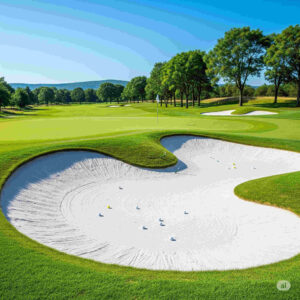
0.6–1.18 mm (16/30) Natural Sand For Golf Courses
The 0.6–1.18 mm (16/30) natural sand media is a precisely graded, high-purity granular material specifically developed for use in Golf Courses. Sourced from naturally occurring, select silica deposits, this sand exhibits exceptional uniformity, a high silica content, and a sub-angular to rounded grain shape, ensuring optimal filtration performance and long-term chemical stability. Its specific grain size is ideal for efficiently capturing fine suspended solids, turbidity, and colloidal particles while maintaining excellent permeability, making it a cornerstone golf course use.
Use of Sand in Golf Courses: Technical Details, Purpose, and Selection
Sand plays a pivotal role in the design, maintenance, and playability of golf courses, extending far beyond its use in bunkers. This article explores the technical details, reasons for its use, and the specific types of sand employed to ensure optimal course conditions.
Why Sand is Used
Sand is integral to golf courses for several key reasons:
Drainage: Sand’s porous nature allows water to percolate quickly, preventing waterlogging, especially in areas with heavy rainfall. This is crucial for maintaining playable surfaces on greens, fairways, and bunkers.
Aeration: By promoting air circulation to grassroots, sand prevents soil compaction, fostering healthy turf growth and resilience.
Leveling and Thatch Control: Sand is applied as a topdressing to smooth out uneven surfaces and break down thatch—a layer of organic material that can hinder turf health if left unchecked.
Bunker Functionality: In bunkers, sand provides a challenging yet consistent playing surface, testing golfers’ skills while offering a defined hazard.
Turf Recovery: Sand mixed with grass seed in divot repairs accelerates turf regrowth by improving drainage and supporting root development.
Aesthetic Appeal: The contrast between sand and green turf enhances the visual appeal, adding definition to the course layout.
Technical Details
The application of sand involves precise techniques:
Topdressing: Fine sand is evenly spread over greens and fairways, often post-aeration, to integrate with soil and level the surface. The process requires careful timing—preferably in good weather—to avoid smothering grass or fostering fungal growth.
Bunker Construction: Sand depth and composition are tailored to local conditions, with liners sometimes used to enhance drainage and reduce contamination from underlying soil.
Particle Size and Shape: The United States Golf Association (USGA) recommends bunker sand with 80% of particles between 0.25 and 1 millimeter, and 10-20% coarser (1-2 mm) for stability in windy areas. Angular or sub-angular grains are preferred for firmness, while round grains offer softer play.
Moisture Management: Ideal bunker sand maintains about 15% moisture at 1 inch depth after drying, ensuring playability without excessive wetness or dryness.
Testing: Labs assess sand using penetrometer tests (measuring firmness) and soil moisture release curves to determine optimal depth and drainage properties.
Types of Sand Used
Not all sand is suitable for golf courses. The selection depends on its physical and chemical properties:
Silica Sand: Composed of at least 95% silicon dioxide (SiO2), this is the gold standard due to its hardness, chemical inertness, and weather resistance. It’s widely used in bunkers and greens for its durability and drainage.
Washed Sand: Cleaned to remove fine particles and impurities, this type ensures better drainage and prevents crusting, making it ideal for bunkers in rainy regions.
White Sand: Often made from crushed limestone or marble, it’s used for aesthetic contrast and softer play, common in upscale courses.
Coarse Sand: With larger particles, it provides firm surfaces and superior drainage, preferred for bunkers and high-traffic areas.
Fine Sand: Softer and smoother, it’s used on greens for coverage but requires careful management to avoid compaction.
Divot Mix: A blend of sand and grass seed, sometimes colored green, aids divot repair and turf recovery.
Selection Considerations
Choosing the right sand involves balancing playability, maintenance, and environmental factors:
Climate: Coarser sand suits wetter climates for drainage, while finer sand may be better for drier regions needing moisture retention.
Soil Compatibility: Sand must match the course’s soil to avoid disrupting nutrient and water movement.
Maintenance: Coarser sands require less frequent replenishing, aligning with budget constraints.
Aesthetics: Light-colored sands (white, tan) are popular for visual impact, though darker sands may reduce glare and maintenance needs.
Playability: Sand firmness and texture affect difficulty, with coarser sand increasing challenge.
Conclusion
Sand is a multifaceted component of golf course management, enhancing functionality, health, and beauty. By selecting the appropriate type and applying it with precision, courses can optimize playability and longevity, ensuring an exceptional experience for golfers while sustaining the turf’s vitality.