
Hey there, railway enthusiasts and safety advocates! 👋 When you witness a mighty train effortlessly gliding along the tracks, or hear the powerful roar as it starts its journey or comes to a smooth halt, do you ever consider the tiny, yet critical, elements that make it all possible? Beyond the massive engines and complex braking systems, there’s a humble material playing an indispensable role: natural silica sand for traction.
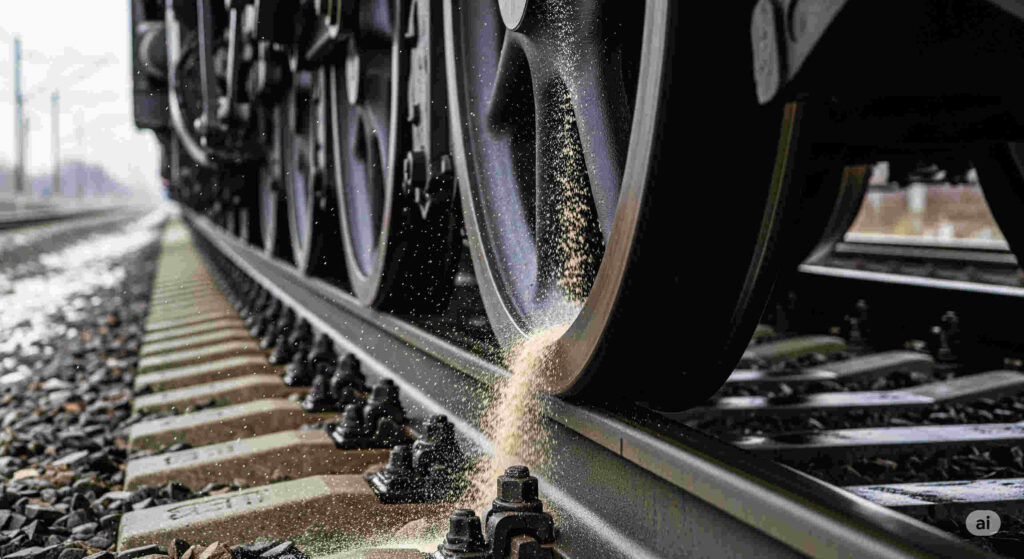
This specially graded granular material is the silent guardian against wheel slip, a common challenge in railway operations. Today, we’re going to embark on a fascinating journey to explore why natural silica sand for traction is so crucial, how it works its magic, and the myriad scenarios where its timely application means the difference between smooth operation and potential hazard. As manufacturers of high-quality natural silica sand for traction, we understand the stringent demands of the railway industry and the vital role this material plays in ensuring both efficiency and safety on the tracks.
The Critical Importance of Traction in Railways 🚨
At the heart of every train’s movement lies a fundamental principle: traction. This is the friction between the locomotive’s driving wheels and the railway tracks. Without adequate traction, a train cannot:
Start Moving: Especially with heavy loads or on inclines.
Accelerate Efficiently: Slow starts waste time and fuel.
Climb Grades: Even slight inclines become insurmountable without sufficient grip.
Brake Effectively: Reduced friction means longer stopping distances, a major safety concern. 🛑
Maintain Control: Slipping wheels can lead to damage, derailment, or loss of control, particularly in adverse conditions.
The relationship between steel wheel and steel rail is inherently low-friction. While efficient for rolling, it becomes problematic when force needs to be transmitted for acceleration or deceleration. This is where natural silica sand for traction steps in as a game-changer.
How Natural Silica Sand for Traction Works its Magic ✨
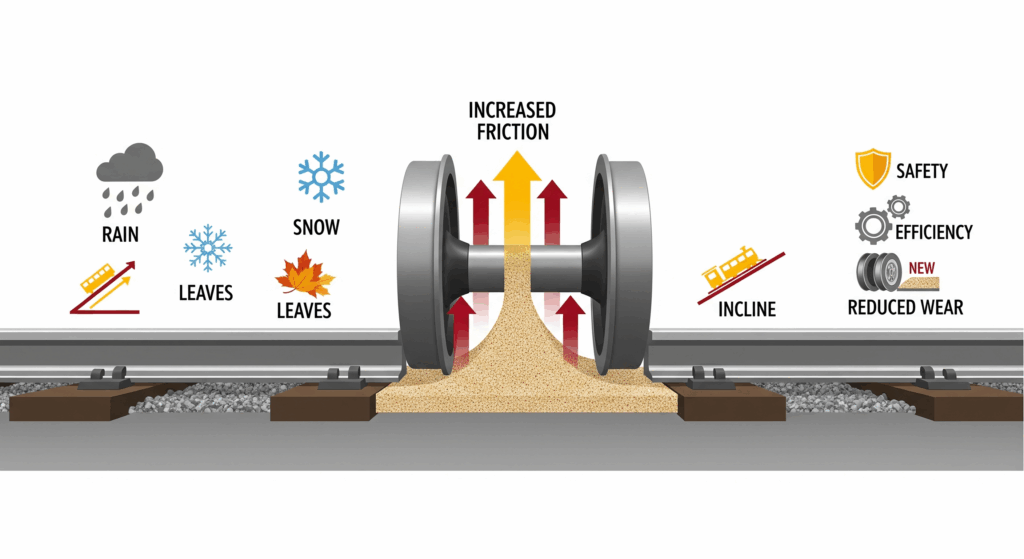
The application of sand directly onto the rail, just ahead of the driving wheels, significantly increases the coefficient of friction between the wheel and the rail. This simple yet profound action is achieved through several key mechanisms:
Abrasive Grit: The sharp, angular, or sub-angular grains of natural silica sand for traction provide a direct abrasive action, digging into the microscopic irregularities of both the steel wheel and the rail surface.
Increased Contact Area: When sand is crushed between the wheel and rail, it effectively creates a multitude of tiny, high-friction contact points, momentarily increasing the grip.
Moisture/Contaminant Absorption: In wet conditions (rain, snow, ice), natural silica sand for traction absorbs surface moisture and can cut through thin layers of ice or compacted leaves, providing a dry, rough surface for the wheel to grip.
Shearing Resistance: The sand grains resist shearing forces between the wheel and rail, translating the rotational force of the wheel more effectively into linear motion.
The result is a dramatic increase in available traction, allowing the locomotive to develop higher pulling power (tractive effort) for starting and acceleration, and vastly improved braking performance.
Why Natural Silica Sand is the Preferred Choice for Traction 🌿💎
Not just any sand will do for railway traction. The demanding environment and critical safety requirements necessitate a material with very specific properties. This is where natural silica sand for traction truly excels:
High Hardness: Derived from quartz (a 7 on the Mohs scale), natural silica sand for traction is extremely hard. This ensures the grains don’t easily crush or turn to dust under the immense pressure between wheel and rail, maintaining their abrasive properties.
Optimal Angularity/Sub-angularity: Unlike perfectly rounded beach sand, specialized natural silica sand for traction often has sub-angular to angular grains. This allows for better interlocking and ‘biting’ into the surfaces, maximizing friction.
Purity (High SiO₂ Content): High-purity natural silica sand for traction (high silicon dioxide content) is crucial. Impurities like clay or organic matter can cause clogging in the sanding systems or, worse, become slick when wet, counteracting the intended effect. Our natural silica sand for traction is meticulously processed to guarantee exceptional purity.
Consistent Grading: Precision in grain size distribution is vital. Overly fine sand can become airborne or pack too densely, while overly coarse sand can be inefficient or damage equipment. Our specifically graded natural silica sand for traction ensures uniform application and reliable performance.
Non-Clumping: High-quality natural silica sand for traction is free-flowing and resists clumping, even in humid conditions. This prevents blockages in the sand delivery pipes and ensures immediate response when traction is needed.
The inherent properties of natural silica sand for traction make it uniquely suited to withstand the extreme pressures and varying environmental conditions encountered on railway lines.
How Rail Sanding Systems Work ⚙️
Locomotives are equipped with “sandboxes” or “sand reservoirs” that store the natural silica sand for traction. These systems are designed for precise delivery:
Storage: Sand is kept in large bins on the locomotive.
Delivery Mechanism: When the engineer activates the sanders, compressed air or gravity feed mechanisms push the natural silica sand for traction through pipes and nozzles.
Point of Application: The nozzles are strategically positioned to deposit the sand directly onto the rail, just a few inches in front of the driving wheels’ contact point with the track. This precise placement ensures maximum benefit where it’s needed most.
Control: Modern locomotives often have automated sanding systems that can detect wheel slip and apply sand automatically, in addition to manual control by the engineer.
Scenarios Where Natural Silica Sand for Traction is Indispensable 🌧️🏔️
The application of natural silica sand for traction is not a constant process but rather a tactical one, deployed in specific situations to overcome traction challenges:
Wet or Slippery Tracks: Rain, dew, light snow, or even condensation can drastically reduce friction. Natural silica sand for traction cuts through these moisture films, providing essential grip. This is particularly crucial in regions with heavy monsoons or winter weather.
Leaf Fall Contamination: In autumn, crushed leaves on tracks create a notoriously slick, almost greasy, surface. Sanding helps the wheels bite through this organic layer. 🍂
Steep Gradients (Inclines): Starting or climbing uphill with a heavy train requires immense tractive effort. Natural silica sand for traction provides the extra grip needed to prevent wheels from spinning uselessly.
Heavy Train Starts: Even on flat, dry tracks, getting a long, heavy freight train moving from a standstill puts enormous strain on the traction system. A burst of natural silica sand for traction provides the initial bite.
Emergency Braking: In critical situations requiring rapid deceleration, sand is often applied to maximize braking friction, significantly reducing stopping distances and enhancing safety.
Contaminated Tracks: Oil spills, fine dust, or other debris on the tracks can also reduce traction, making natural silica sand for traction a necessary intervention.
Benefits of Using High-Quality Natural Silica Sand for Traction ✅
The choice of natural silica sand for traction directly impacts railway operations’ safety, efficiency, and economics:
Enhanced Safety: The primary benefit. Reduces wheel slip, prevents uncontrolled movements, and shortens braking distances, significantly improving overall operational safety. 🛡️
Improved Efficiency: Allows trains to start and accelerate more smoothly, reducing delays and optimizing fuel consumption by preventing wasted energy from slipping wheels. ⏱️
Reduced Wheel and Rail Wear: While it provides friction, high-quality natural silica sand for traction (when properly applied) actually helps prevent excessive wheel spin that causes flat spots on wheels and undue wear on rails, extending the lifespan of valuable assets.
Reliable Performance: Consistent quality and precise grading of natural silica sand for traction ensure reliable flow through sanding systems and predictable results on the track.
Cost-Effectiveness: Given its vital role, the cost of high-quality natural silica sand for traction is a small investment for the immense benefits it provides in terms of preventing accidents, reducing wear, and improving operational fluidity.
Environmental Compatibility: Being a naturally occurring mineral, natural silica sand for traction is an environmentally benign material, contributing to sustainable railway operations. 🌍
Our company takes pride in manufacturing natural silica sand for traction that meets the stringent requirements of railway applications. Our 1.18–2 mm Natural Sand Filter Media (which, due to its properties, also serves railway traction needs when specifically graded for that purpose) exemplifies the purity, hardness, and uniformity required for peak performance. Learn more about our robust and precisely graded natural silica sand for traction products engineered for your specific needs: [Link to your 1.18-2mm Natural Sand Filter Media product page – assuming this product can be specifically graded/marketed for traction as well]. We ensure that every grain contributes to safer and more efficient railway journeys.
Quality Control and Maintenance of Rail Sanding Systems 🔬
The effectiveness of natural silica sand for traction depends not only on the quality of the sand but also on the proper functioning of the sanding system.
Regular Inspection: Sanding systems, including nozzles and delivery pipes, must be regularly inspected for blockages, wear, or damage.
Sand Storage: Natural silica sand for traction must be stored in dry conditions to prevent clumping.
Consistent Supply: Ensuring a continuous and readily available supply of high-quality natural silica sand for traction is crucial for operational readiness.
Rigorous quality control processes, from sourcing the raw materials to the final grading of natural silica sand for traction, are essential to guarantee its performance in this critical application.
The Future of Railway Traction and Sanding Technology 🚀
While new technologies like adhesion enhancers and advanced control systems are emerging, the fundamental role of natural silica sand for traction remains unchallenged due to its simplicity, effectiveness, and cost-efficiency. Future developments might focus on:
Optimized Sand Delivery: More precise and efficient application methods to minimize sand consumption and maximize effect.
Smart Sensing: Enhanced sensor technologies to detect slippery conditions even more accurately, triggering automated sanding.
Environmentally Friendly Sanding: Further research into minimizing dust and optimizing dispersal.
Conclusion: The Tiny Grains Making a Giant Difference 🌟
In the vast and complex world of railways, the unassuming natural silica sand for traction stands out as a material of profound importance. It’s the silent enabler of smooth starts, powerful climbs, and safe stops, ensuring that trains can navigate the challenges of varying track conditions and heavy loads.
As a critical component in railway safety and operational efficiency, the quality of natural silica sand for traction is paramount. By understanding its properties and ensuring a consistent supply of high-grade material, we empower locomotives to maintain their grip, guaranteeing safer journeys and a more robust railway network for everyone. So, next time you hear a train, remember the small grains of natural silica sand for traction diligently working to keep it on its way.